
From the journal
Glacier Point vs Tunnel View — which view first
Two of the most-photographed spots in the park. They look very different at different times of day.
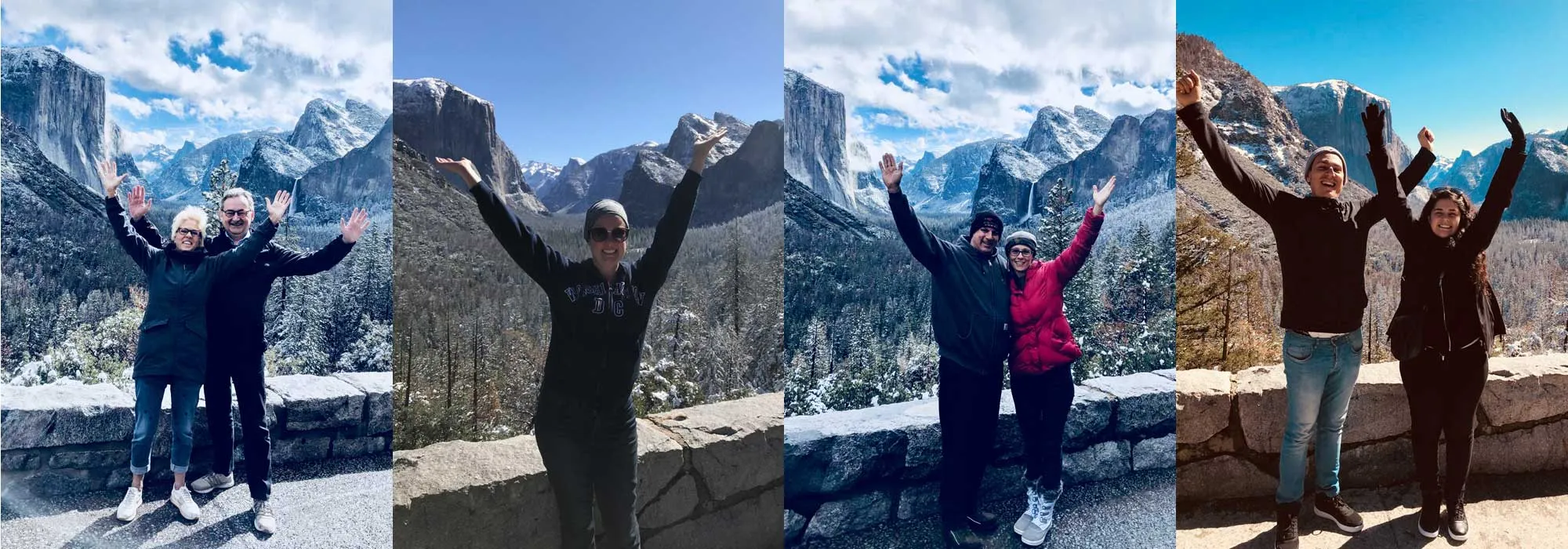
Two views, one mistake
Every first-timer asks for both, and they should — these are the two views that put Yosemite on calendars. The mistake is treating them as interchangeable. They show you different parks, they peak at different hours, and one of them is closed half the year.
Tunnel View: the reveal
Tunnel View is the one that happens to you. You come through the Wawona Tunnel on Highway 41 and the Valley opens up all at once — El Capitan on the left, Bridalveil Fall on the right, Half Dome small and far in the center. Stand at the wall, put your arms up, and you’ve “made the Yosemite Y” — the guest photo our guides have been framing at this overlook for twenty years.
The practical facts: it’s a parking lot with a stone wall. No hike, no fee beyond the gate, thirty seconds from car to view. If you’re arriving from the south entrance — Fish Camp, Oakhurst, Fresno — it is literally on your way in, which is why it’s the first stop on our tours from that side.
Light: the view faces east, up the Valley. In the morning you’re shooting into the sun — the cliffs go hazy and backlit. From mid-afternoon the light comes over your shoulder and El Capitan turns gold. The most famous photographs ever made here — think of Ansel Adams’ clearing storms — were made looking into weather, late in the day. If it’s raining when you arrive, don’t sulk. Storm light at Tunnel View is the best light there is.
Glacier Point: the balcony
Glacier Point doesn’t reveal the Valley — it puts you 3,200 feet directly above it. You’re at eye level with Half Dome’s face, close enough that it stops looking like a postcard and starts looking like a wall. Below you: Vernal and Nevada Falls stacked on the Merced, Yosemite Falls across the void, and the High Sierra running to the horizon behind Clouds Rest.
The practical facts: it’s a 16-mile spur road that climbs from Chinquapin, about an hour from the Valley floor, and it’s closed by snow from roughly November to late May. If you’re visiting in winter or early spring, this view does not exist for you — plan around Tunnel View and the Valley floor instead. When it’s open, we’re among the very few companies licensed to drive guests up there, and we give the stop 30–45 minutes because nobody is ready to leave sooner.
Light: midday up here is flat and hazy — fine for being there, mediocre for photographs. The hours before sunset are the show: Half Dome’s face takes the warm light head-on, and the whole High Country goes amber. Sunrise puts the sun behind Half Dome — dramatic silhouette, no detail.
So which first?
If you’re coming in from the south on a one-day trip: Tunnel View first, because the road decides for you — it’s on the way in, and the stop costs you fifteen minutes. Then the Valley floor, then save Glacier Point for as late in the day as the schedule allows, when the light starts to work for it.
On busy summer weekends we sometimes run it the other way — Valley first, Glacier Point for the picnic lunch — purely to dodge traffic. That’s the honest answer about sequencing in Yosemite: the photogenic order and the traffic-smart order aren’t always the same, and a guide who drives this loop every week is mostly valuable because they know which one today is.
One more thing: don’t let the famous pair crowd out the in-between. The climb to Glacier Point passes Washburn Point — nearly the same view with a better angle on the waterfalls — and the Valley floor between the two stops is where El Capitan actually towers over you. The views are the bookends. The park is the middle.